


Robert M. Wald, Jr., MD - The Aesthetic Institute
Contact Us : (714) 312-3549

Orange County | Fullerton, CA

« Back to Blog

SALINE OR SILICONE BREAST IMPLANTS

Which breast implant is better for me, silicone or saline?

saline or silicone breast implantsThe moratorium on silicone implants was lifted 2 years ago.  This FDA edict began in 1992.  During this time, (1992-2011) only women with breast cancer, or chest deformities, or ruptured implants, were allowed to have silicone gel.  As a result, normal women who wanted breast augmentation during this time were required to have saline implants.  The result of breast augmentation with saline implants is quite good, but there are differences between silicone and saline.

The appearance of saline implants is quite good but not quite as natural as silicone. Saline implants are firmer due to the water component located within the shell of the implant.  A silicone device has silicone gel on the inside of the shell and for this reason silicone gel implants are softer than saline.

The main concern the FDA has about silicone implants is how to detect a leak.  If a silicone implant ruptures, in almost all cases, the breast appears to be normal.  It maintains its softness and symptoms are uncommon.  Occasionally, however there are obvious changes with a rupture.  The symptoms include pain and throbbing and an obvious change in the shape of the breast.  Because detection of a rupture is difficult, the FDA recommends that a woman with silicone implants obtain a MRI of her breast every 3-4 years.  The MRI is the best test available to detect an implant rupture.

However, the MRI is only 85% specific for rupture and not a 100%.  For this reason there are some false negatives and positions with the MRI.  A woman with saline implants will not have required an MRI for implant leak because if a saline implant ruptures it will deflate.  This is easily detected both by patient and doctor and is a 100% safe if it does rupture.

The other concern about implants is capsular contracture.  When this occurs, the breast become firm, misshapen and occasional discomfort; this problem can occur with either saline or silicone.  The literature suggests that there is no difference in contracture with either silicone or saline.
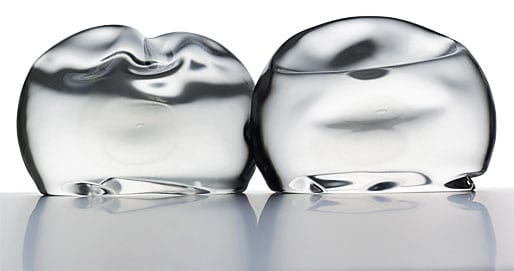
silicone or saline breast implantsAnother difference between silicone and saline is the amount of rippling and palpability of the implant.  Since saline is firmer, this tends to cause more rippling or waviness of underneath the skin. The saline also is more palpable because of the firmness.   A woman with small breasts and a minimal amount of body fat is quite susceptible to rippling and for this reason I always suggest silicone in this type of women.

Another difference between silicone and saline are the cost.  Saline implants are less expensive than silicone.  Silicone costs approximately $2000.00 for a pair and saline about $1000.00.  Both implants have a 10 year warranty by the manufacturer.

In summary, both implants are good, but there are differences between the two.  Every woman has to make her own decision about which is best.

Please contact Dr. Wald with any questions/comments or to schedule a consultation.
Facelift Surgery Cost in Orange County

Average Cost of Facelift Surgery  

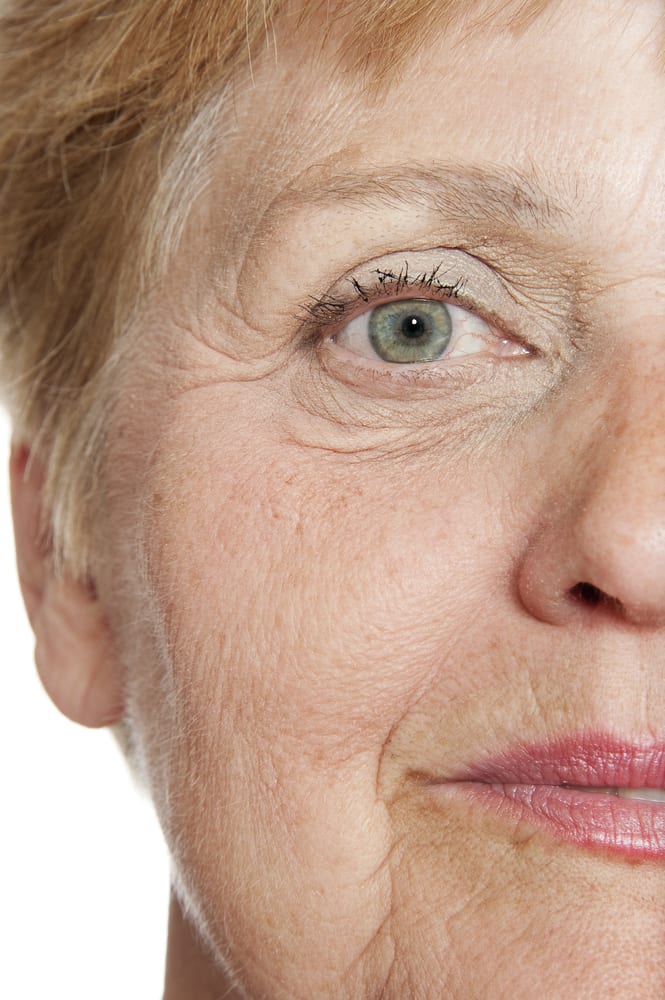
facelift surgery costFacelift costs can be very confusing to most patients. The reason for this is that facial rejuvenation is complicated and includes many of the aging characteristics.            

A facelift is a surgical procedure to improve the visible signs of aging in the face and neck.  These signs include sagging in the mid face, fat that has fallen or is displaced, loose skin and excess fatty deposits under the chin and jaw, and deep creases below the lower eyelids.

A facelift does not include correction of the forehead, brow position, eyelids, wrinkles around the mouth and eyelids, and general fat loss in the lips and in the face.  To correct these problems a browlift,  blepharoplasties, laser therapy, and fat injections would be required. These procedures are in addition to a facelift and would be priced separately.

Also, facelifts vary in their complexity and whether they correct only the mid face or mid face and neck.  Most mid facelifts correct the cheeks and jowls. A more extensive facelift would also correct the neck and involve more incisions and time.  A mini facelift (mid facelift) involves less incisions and time, and would cost less than a full face and neck lift. 

facelift costCosts for a facelift vary on geographic location of the office and the doctor’s experience. It is important to know what is involved with a facelift fee. There are many costs involved with facelift surgery. These include:

– Surgeon’s fee

-Hospital or surgical facility costs

-Anesthesia fees

-Preoperative medical costs

-Medication fees

-Post-surgical garments

-Aftercare fees

As I have described, facelift surgery depends on the technique used and the extent of the procedure. In general, a minor (mini) facelift will cost $11,000, on average. Standard (full) face and neck lift surgery, on average, will cost $13,500. A mid facelift will cost $10,000, on average. A lower facelift, on average, will cost $11,000.

In addition, eyelid surgery, brow lift surgery, facial liposuction, fat injections, or laser therapy added at the same time of a facelift will increase the cost of treatment.  Patients should realize that numerous financing plans are available for this surgery and can make this procedure quite affordable.  Many plastic surgery offices offer facelift financing plans and accept a variety of payment options.

When choosing a plastic surgeon for facelift surgery, remember that the surgeons experience and your comfort with him or her are just as important as the final cost of the surgery.

Dr. Robert Wald

Gummy Bear Breast Implants – Shaped Breast Implants


TEARDROP (ANATOMICALLY) SHAPED BREAST IMPLANTS

gummy bear shaped breast implantBreast augmentation is a very popular surgery that is safe and reliable with wonderful results. Patients now have several choices for implants. These include saline, silicone gel and the new anatomically shaped implants (Gummy Bear). All of these implants provide good results, but each implant has advantages and disadvantages.

Saline implants are cheaper than the silicone gel products (approximately $800 less expensive). The main advantage this implant has over silicone is the detection of a leak. Since a saline implant is like a water balloon, a rupture in the shell will cause the implant to deflate. Therefore, every woman will know when a rupture occurs. No ultrasound or MRI is needed to detect a leak since the rupture is obvious. The main disadvantage of a saline implant is that it is firmer and not quite as natural feeling as the silicone products.

gummy bear breast implantsSilicone gel implants were first used 50 years ago. The earlier devices had some problems including a high frequency of rupture and silicone gel bleed. They were very soft and naturally appearing. The newer silicone gel products have a thicker shell and less likely to rupture. The gel is more cohesive (thicker) than the earlier devices. These devices come with a smooth surface and a textured surface. An MRI or ultrasound is required to detect a leak. They were re-approved by the FDA two years ago to be used in all women. We believe the rupture rate is approximately 3% over the first ten years and will probably last twenty to thirty years.

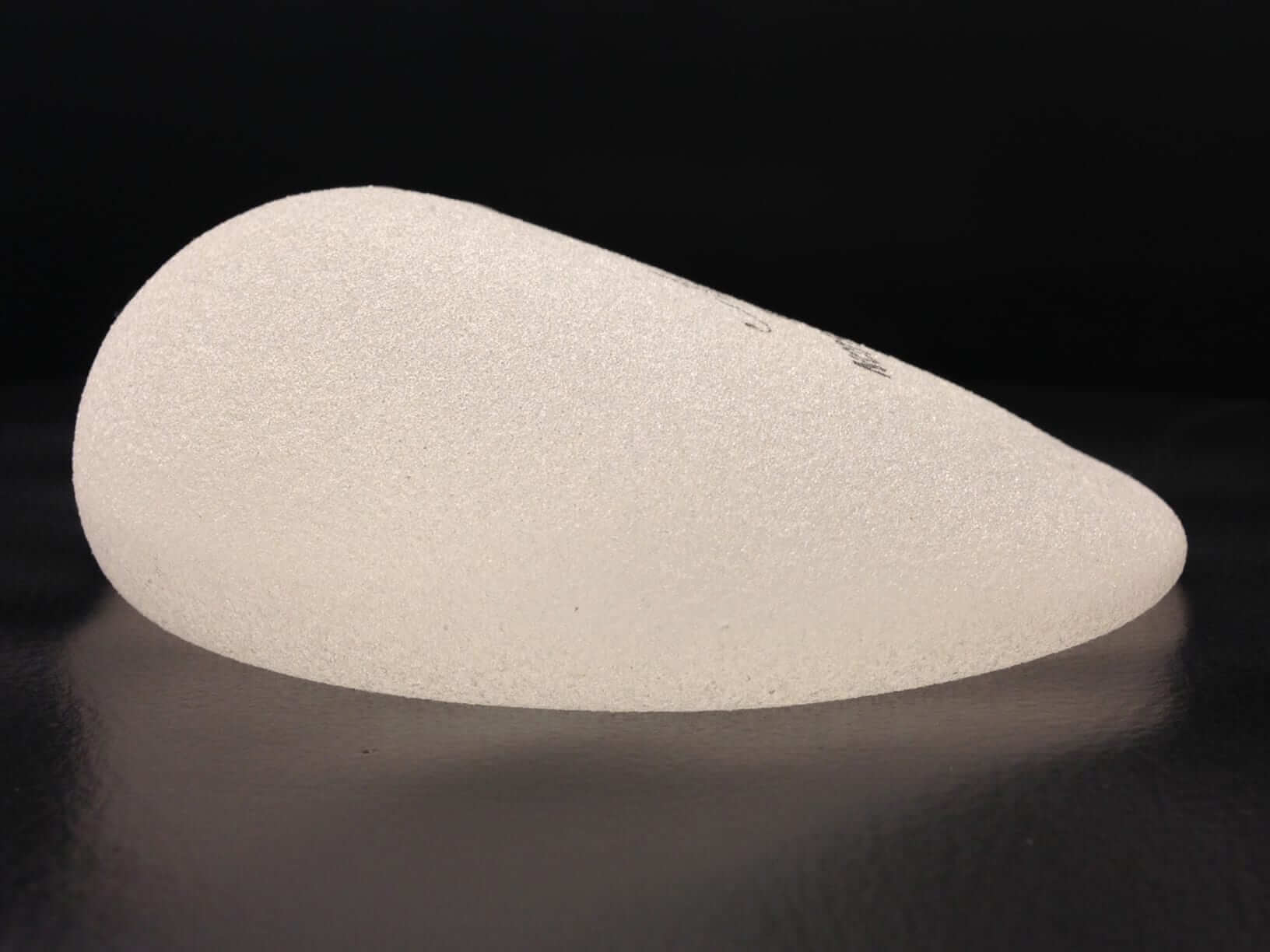
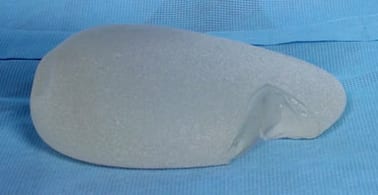
Anatomically shaped implants (Gummy Bear) are the newest devices recently approved by the FDA. Reported benefits to these implants include more natural/proportionate breast shape, improved longevity, decreased likelihood of capsular contracture, decreased likelihood of postoperative rippling and a lower incidence of re-operation. gummy bear breast implant cut openGummy Bear breast implants is a slang term referring to this implant since when it is cut in half, it won’t leak similar to cutting a gummy bear in half.

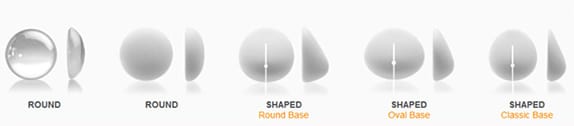
These teardrop shaped breast implants are made of high strength silicone gel. This material is very dense, resulting in a semi-sold form. The main advantage to these implants is that because they are semi-solid, they maintain their shape and remain in an upright position when they are positioned in the breast. These implants have been designed to replicate the look and feel of a natural breast. They are more naturally shaped and will lack the excessive fullness in the upper breast that is seen commonly with round implants. Even though these implants may rupture, no free silicone is delivered into the breast pocket or tissue that occurs with a round silicone gel implant.

breast comparison chart

In summary, a patient has choices for breast augmentation. Each implant has advantages and disadvantages and it is up to the woman to make her own choice.

Please contact Dr. Wald with any questions/comments or to schedule a consultation.
Cosmetic vs. Plastic Surgeon: What’s the Difference?

A male surgeon from the chest to the waist wearing long-sleeved green scrub suit and latex gloves

According to the American Society of Plastic Surgeons (ASPS), 14.6 million cosmetic plastic surgery procedures were performed in 2012. Many people equate cosmetic surgery with plastic surgery, and with millions of cosmetic surgery procedures being performed each year, people often question the difference between a cosmetic surgeon and a plastic surgeon.

Cosmetic Surgeon

Cosmetic surgery is a specialty of medicine that focuses on enhancing a person’s physical appearance through medical and/or surgical techniques. Cosmetic procedures can be performed on all areas of the body, face, and neck.

Any licensed physician may perform cosmetic surgery procedures. Currently, there are no residency programs in the United States devoted exclusively to cosmetic surgery. Any physician who seeks to perform cosmetic surgery may do so, and his/her training and experience is primarily obtained after completing general residency training. A cosmetic surgeon may be a general surgeon, ENT (ears, nose, and throat) specialist, internist, cardiologist, gynecologist, pediatrician, radiologist, ophthalmologist, dermatologist, general practitioner, anesthesiologist, psychiatrist, etc.

In addition, the term “cosmetic surgery” is not a recognized discipline by the American Board of Medical Specialties, which means that there is no such thing as being board certified in cosmetic surgery. Therefore, if a cosmetic surgeon claims to be “board certified,” you should question in what specialty the surgeon is certified.

Plastic Surgeon

Plastic surgery is a specialty of medicine concerned with correcting or restoring form and/or function. This discipline focuses on both reconstructive and cosmetic surgeries.

Reconstructive Plastic Surgery

Reconstructive plastic surgery is intended to correct dysfunctional areas of the body and, as the name implies, is reconstructive in nature. It focuses on facial and body defects caused by birth disorders, trauma, burns, or disease. Types of reconstructive plastic surgery include cranio-facial surgery, e.g., cleft lip or palate; maxilla-facial trauma; burn surgery; and hand/microsurgery.

Cosmetic Surgery (Aesthetic Plastic Surgery)

Many plastic surgeons specialize in cosmetic surgery. Cosmetic plastic surgery encompasses cosmetic surgical procedures that are aesthetic in nature, and it focuses on enhancing a person’s face, neck, and body through surgical techniques. Types of cosmetic plastic surgery include breast augmentation, abdominoplasty (tummy tuck), liposuction, rhinoplasty, face lift, etc.

For a physician to become a plastic surgeon, he/she must complete an approved and extensive residency training program in plastic and reconstructive surgery. A plastic surgeon may become certified by The American Board of Plastic Surgery (ABPS), which means that he/she has graduated from an accredited medical school and has completed at least five years of additional training as a resident surgeon, including a minimum of two years devoted entirely to plastic surgery. Certification by the ABPS is entirely voluntary, and the physician must pass comprehensive written and oral examinations to become board certified in plastic surgery.

Before undergoing any cosmetic or plastic surgery procedure, it is best to choose a board certified plastic surgeon with years of experience performing the type of surgery you wish to undergo. It is also recommended that you review your surgeon’s before and after photos of prior patients who have undergone this same procedure to see the type of results you may expect to receive.

If you are interested in any cosmetic or plastic surgery procedure, please call The Aesthetic Institute to schedule a consultation with our board certified plastic surgeon, Dr. Robert M. Wald. Dr. Wald is certified by both The American Board of Plastic Surgery and The American Board of Otolaryngology and has years of experience performing many aesthetic plastic surgery procedures. To schedule your consultation with Dr. Wald, please call 888-401-2806 or fill out our online contact form.

How to Get Healthy Looking Legs

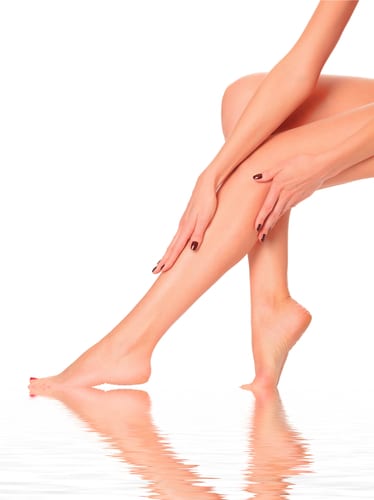
Model rubbing her legs with both handsLately, it seems that everyone is becoming more health and exercise conscience and looking for ways to better their physique. From cross training to swimming, men and women alike are constantly working on toning and strengthening more than their abdominal region. Simply being thin is no longer good enough, which is why ultra-skinny, frail models and actresses are no longer considered role models for the general public. Toned arms and legs are all the rage right now; but, when hours of exercise and healthy eating no longer provide the desired results, many turn to others forms of body contouring.

Get a Leg Up on the Competition!

There are several ways to achieve healthier looking legs. While some are only temporary fixes, others offer more permanent solutions.

Makeup and Self-Tanners

A quick fix for a night out or special event is using makeup and self-tanners to give the appearance of a toned leg and/or arm. From bronzers and highlighters to spray-on tans, the careful strategic placement of these products can help you achieve a sculpted and healthy look. But, what happens when your next shower washes away the illusion of a muscular thigh? Now, with the help of plastic surgery, you can attain the shape you want with a longer-lasting result.

Implants

Calf implants are nothing new and it seems like these are just the tip of the iceberg when it comes to surgically enhancing the legs. There are now various procedures that can be performed in order to help men and women achieve a more sculpted and healthy appearance.

Liposuction

One of the more common surgical procedures that offer more permanent results is micro-liposuction, which can be performed around the thighs and even the ankle/calf area. Typically, excess fat in the outer thighs (“saddlebags”) can be difficult to reduce through diet and exercise, which is where micro-liposuction comes into play. Similar to traditional lipoplasty, a metal rod called a cannula is inserted via small incision in the area to be treated; however, this cannula is smaller, more precise, and better suited for the area. This technique can also be used to remove fat in the “cankle” area – the point where the calf/ankle meet and does not show an obvious separation.

Sclerotherapy

In addition to liposuction, patients who suffer from spider veins or other vascular malformation, such as varicose veins, often consider sclerotherapy. This is a non-invasive procedure that takes only minutes to perform. Sclerotherapy entails using a very small need to inject a fluid into the veins in order to reduce their appearance. In many cases, unsightly veins completely disappear!

The best way to determine an appropriate treatment plan for your specific needs is to schedule an appointment with a qualified professional. To learn more about how to achieve healthy, sculpted legs, we encourage to you to contact The Aesthetic Institute. Our board-certified plastic surgeon, Robert M. Wald, Jr., M.D., has years of experience and can help you achieve the look you desire. To schedule your consultation with Dr. Wald, please call us at 888-401-2806 or fill out our online contact form.

Dr. Wald Looks forward to
helping you reach your
cosmetic goals.
Schedule a consultation


Robert Wald, MD
100 E. Valencia Mesa Drive, Suite 300
Fullerton, CA 92835


Phone: 714-312-3549
Fax: 714-738-1862

Get To Know Dr. Wald
Free Consultation Limited Time Offer!